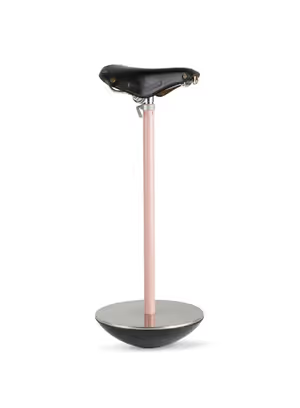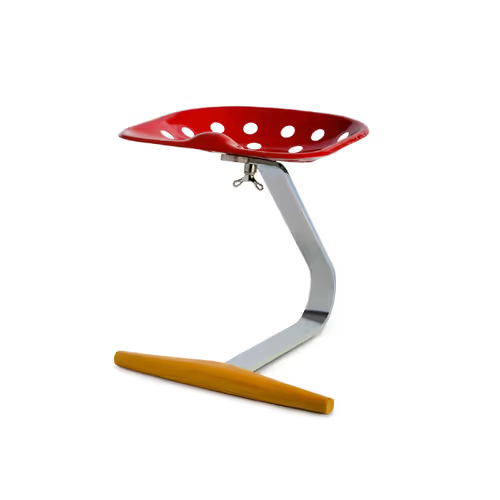
Tractor seats inspired the brothers Achille and Pier Giacomo Castiglioni to design a stool, which they first presented at the XI Triennale di Milano in 1957. It consists of a plywood seat and a curving metal bar. A simple steel rung serves as a counter bearing to stabilize the structure. That same year the Castiglionis designed another version of this unique piece of furniture, this time moulded from a 1935 tractor seat; the seat itself was made from sheet metal and the piece featured a stainless-steel bow and a wooden crosspiece. This model was part of a living-room ensemble which they designed for the exhibition Colori e forme nella casa d’oggi at the Villa Olmo in Como. They also showed another prototype of a stool consisting of a bicycle saddle affixed to a metal bar. Both stool designs follow the same principle of removing serially produced components from their original context as objets trouvés and combining them to form a new article for everyday use. Achille and Pier Giacomo Castiglioni wrote design history with this technique, thus laying the foundations for a more fundamental rethinking of design that would take place a decade later with the emergence of Radical Design. In the late 1960s, Zanotta began producing several Radical Design models and in 1970 the company also took up production of the tractor seat stool. It was adapted to serial production and given the name Mezzadro (sharecropper) as an allusion to its original agricultural context.