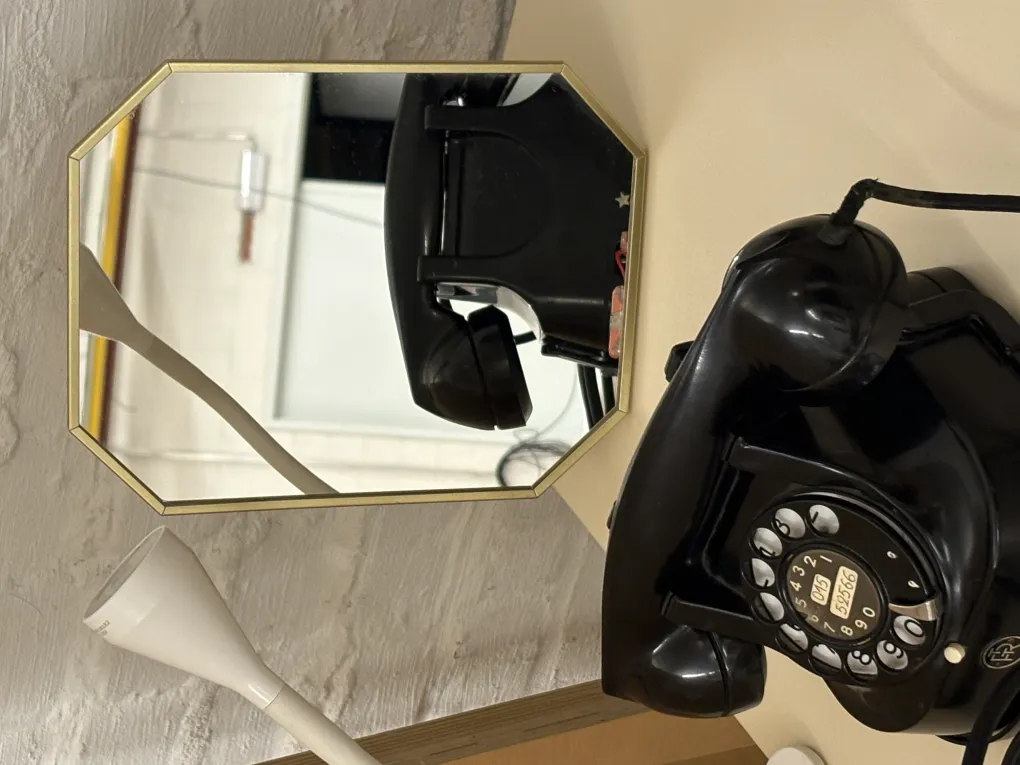
The phones
Before I start building, I want to know which phones I have, do some more research about them, and understand how they work. Turns out, all old rotary phones work in the same way, with the same components. And a lot of information about those specific models is hard to find. But let’s see what I can find.
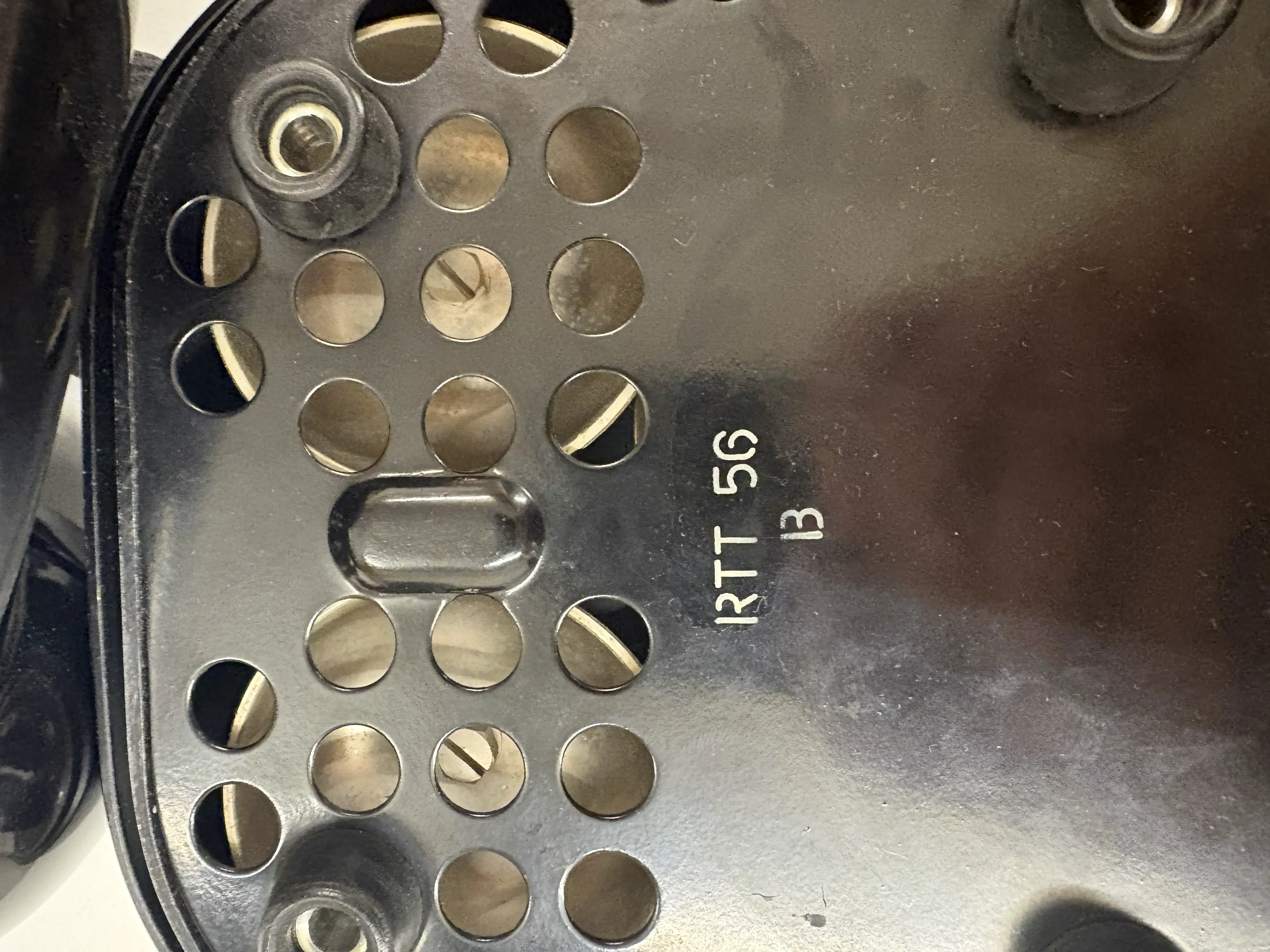
RTT 56B
Year: 1964
Finding this model wasn’t that hard. Apparently, it was a well-known model in Belgium. So I found a lot of information about it. There is even an article by someone who has already restored this model! That might come in handy in the future!
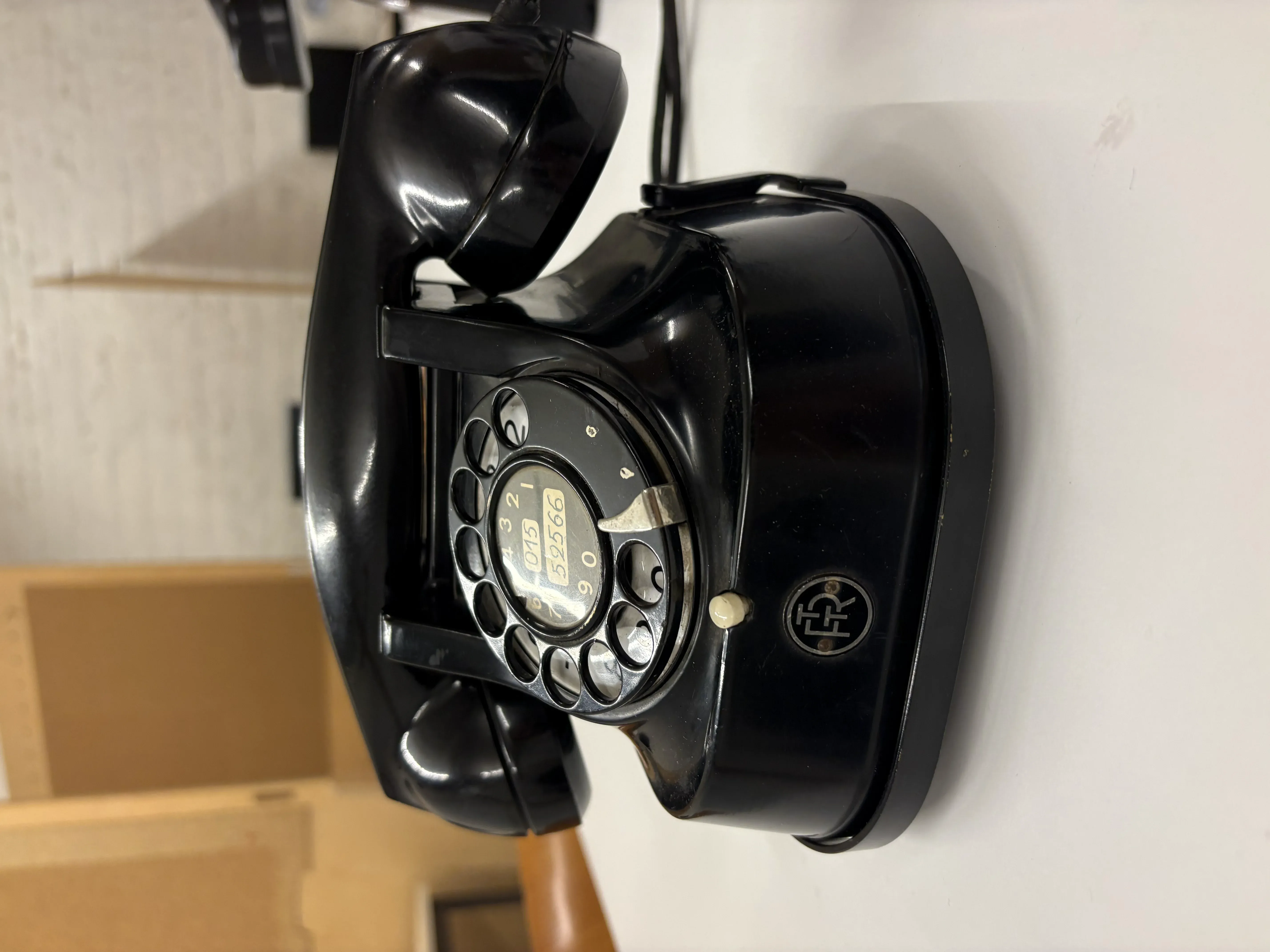
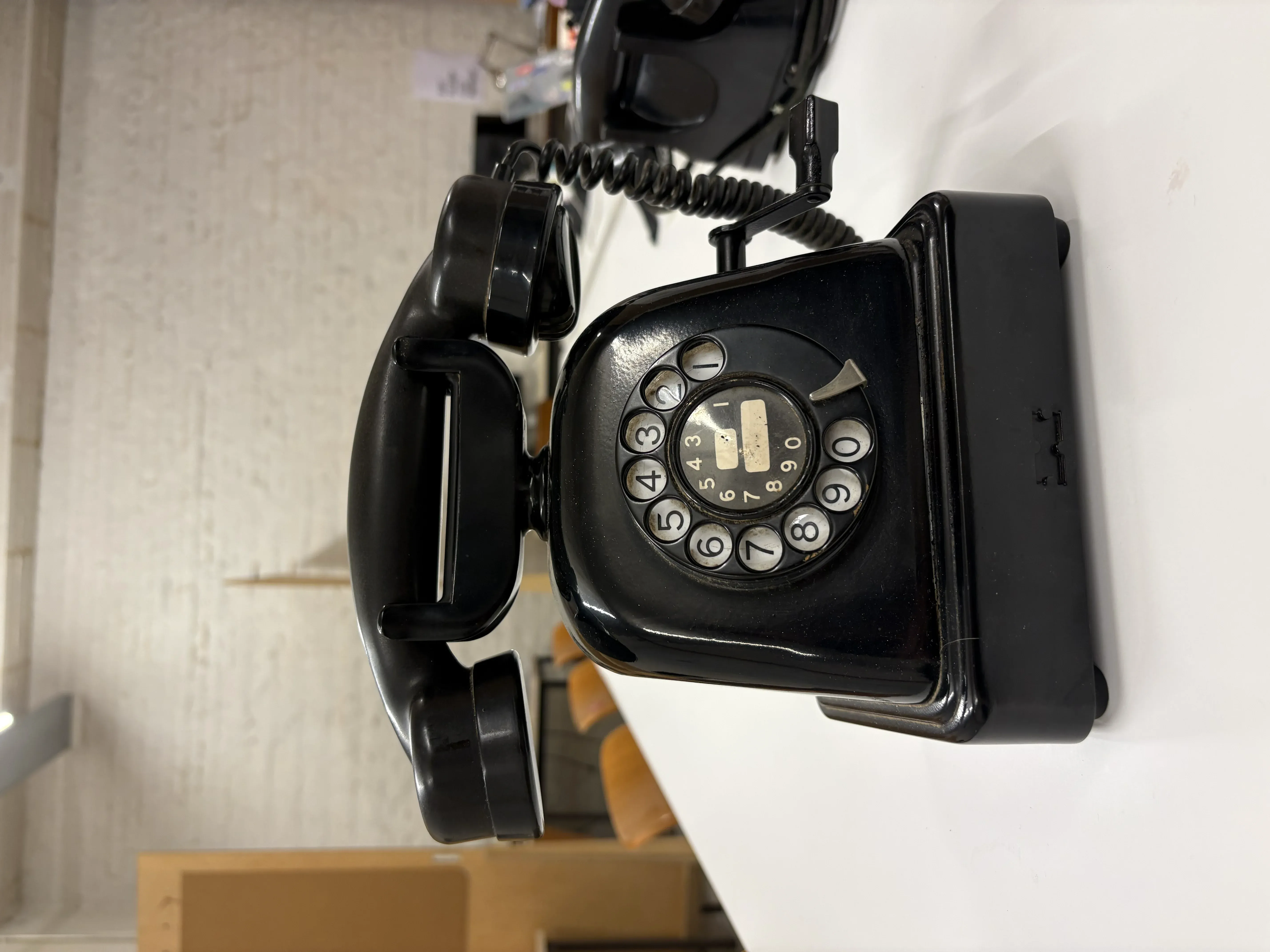
ATEA Type 400
Year: 1959
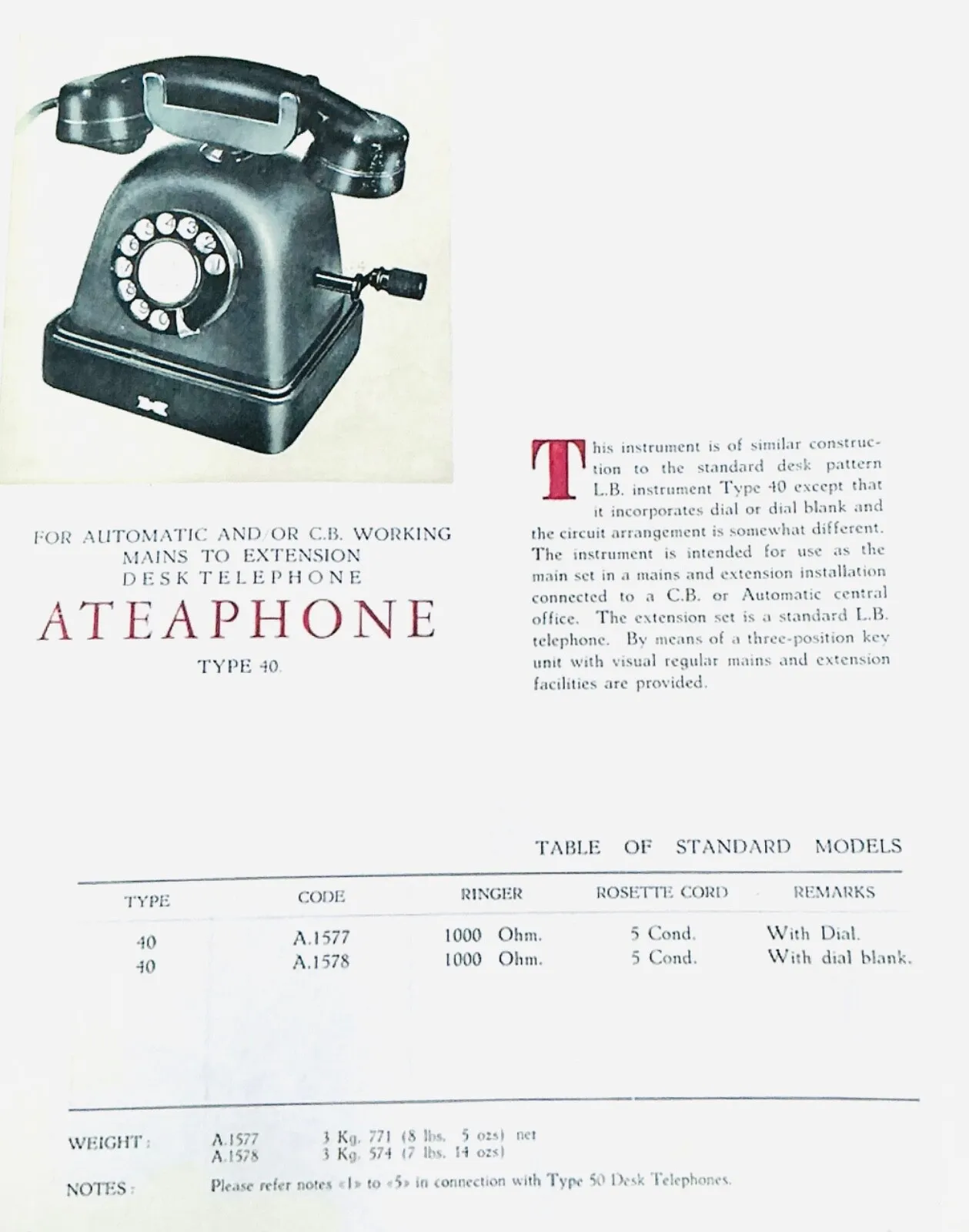
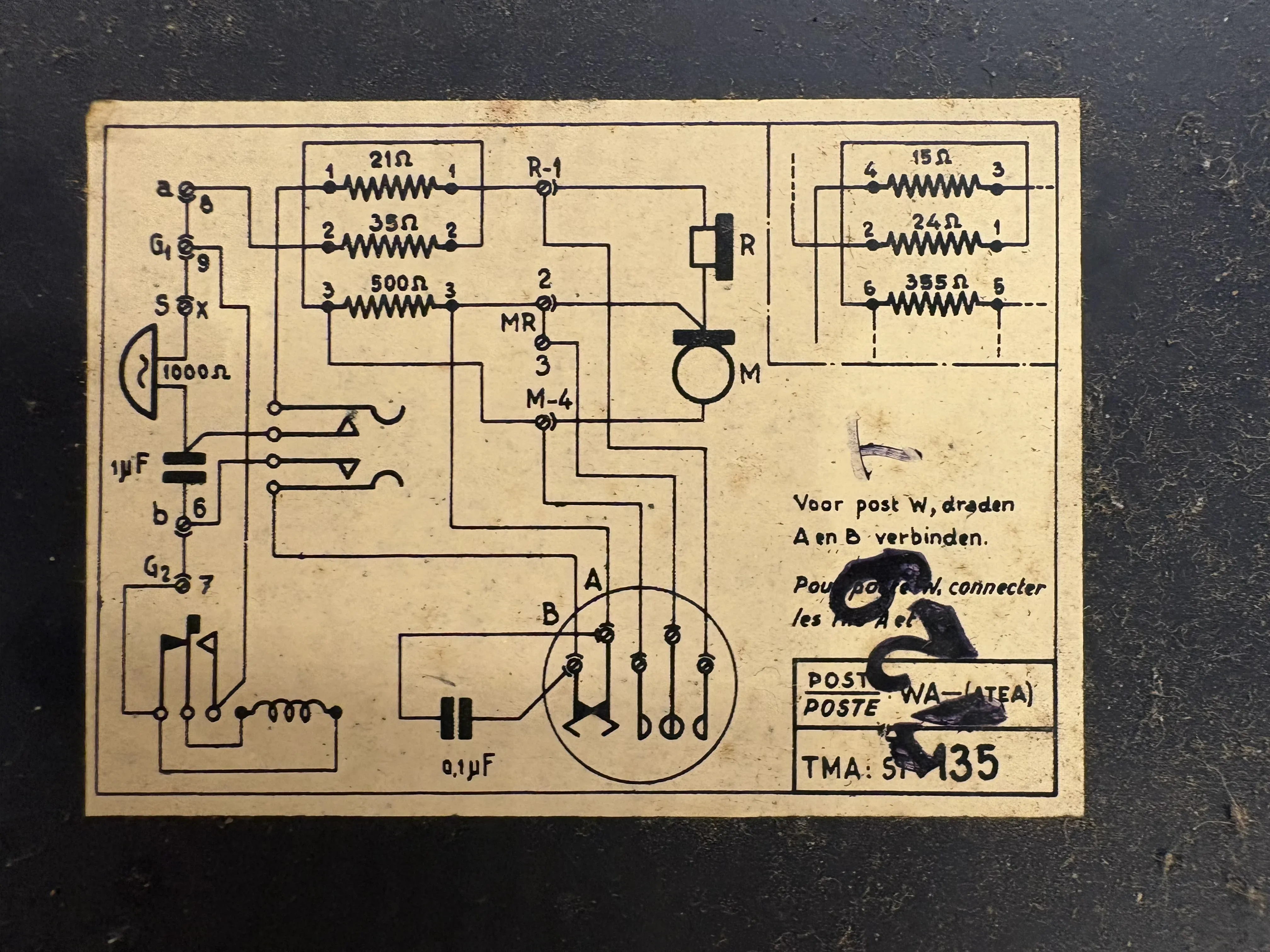
Finding information about this telephone proved to be quite a challenge. Initially, I couldn’t find any mention of the model online. However, after contacting the creator of the Matilo Telephones website, he shared this beautiful original information sheet with me.
One cool finding: this phone was built during the transition era when people still had to call a central exchange. To get a connection, the user had to turn a crank handle to generate electricity and send a signal to the operator. Only then could the exchange manually connect the caller to the receiver. It wasn’t until later that rotary dials were added, finally allowing people to dial a number directly.
How an old rotary phone works
Okay, I have my rotary phones, but I’ll be honest: I still have no idea how they actually work.
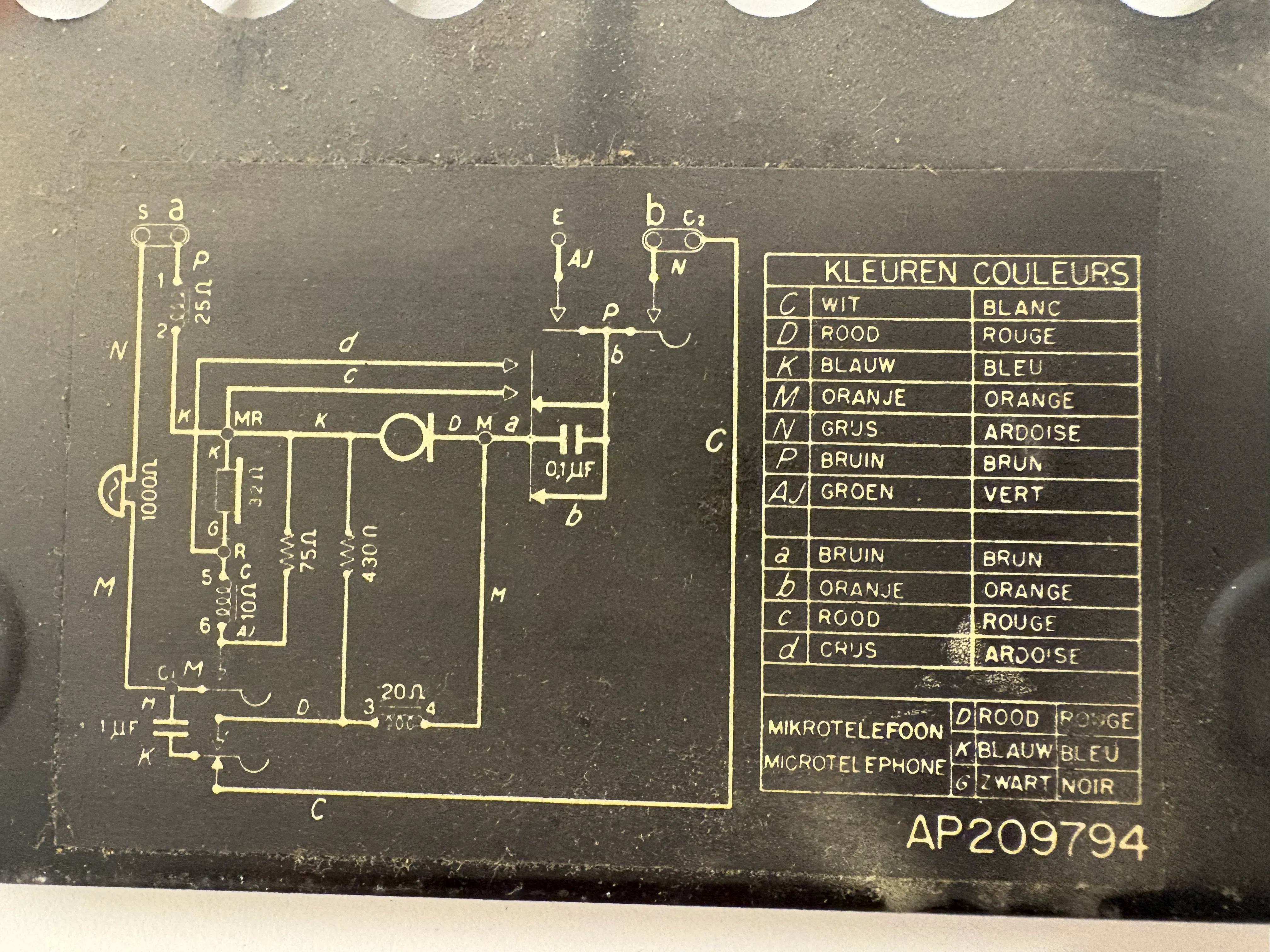
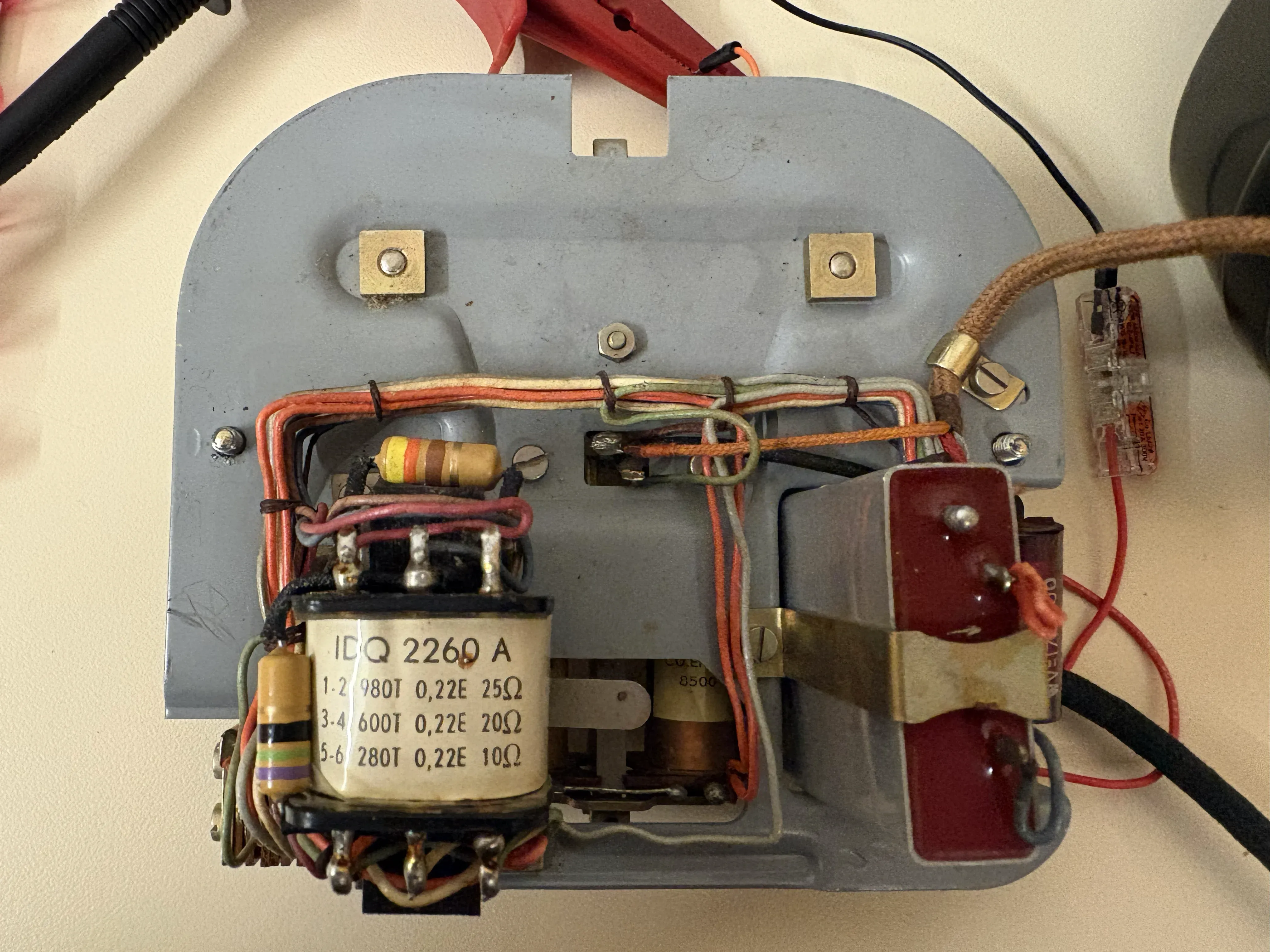
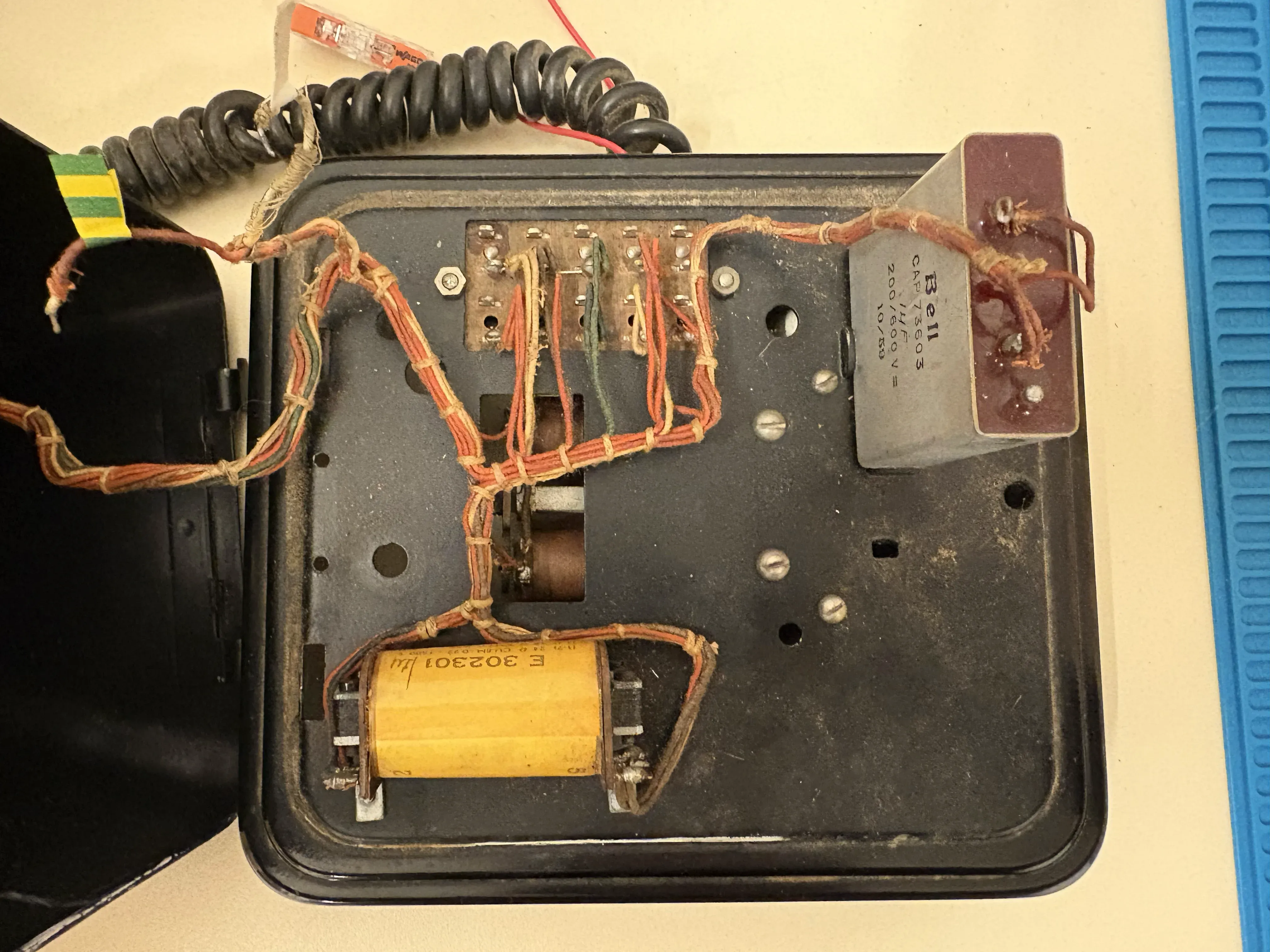
I started by opening the back of one of the phones. Inside, I found a printed scheme of the electrical circuit. I stared at it for a while, but I didn’t understand a thing. Okay, maybe I could recognize the resistors and the capacitors, but that’s about it.
So, I decided to start with the basics. My first question was: “How does sound actually travel from one phone to another?” especially since the only thing coming out of the phone is a simple cable with a plus and a minus side.
Turning voice into electricity
The handset of the phone has two main parts: a carbon microphone and a speaker.
Inside the mouthpiece is a small container filled with carbon granules. When you speak into it, your voice makes these granules vibrate. This vibration creates an electrical signal that is sent through the copper wire to the other phone.
On the other end, that electrical current travels through a coil, which creates a magnetic field. This field vibrates a thin metal disk (the diaphragm). That vibration is what recreates the sound of the voice in your ear. It’s a purely physical process!
How does the phone ring?
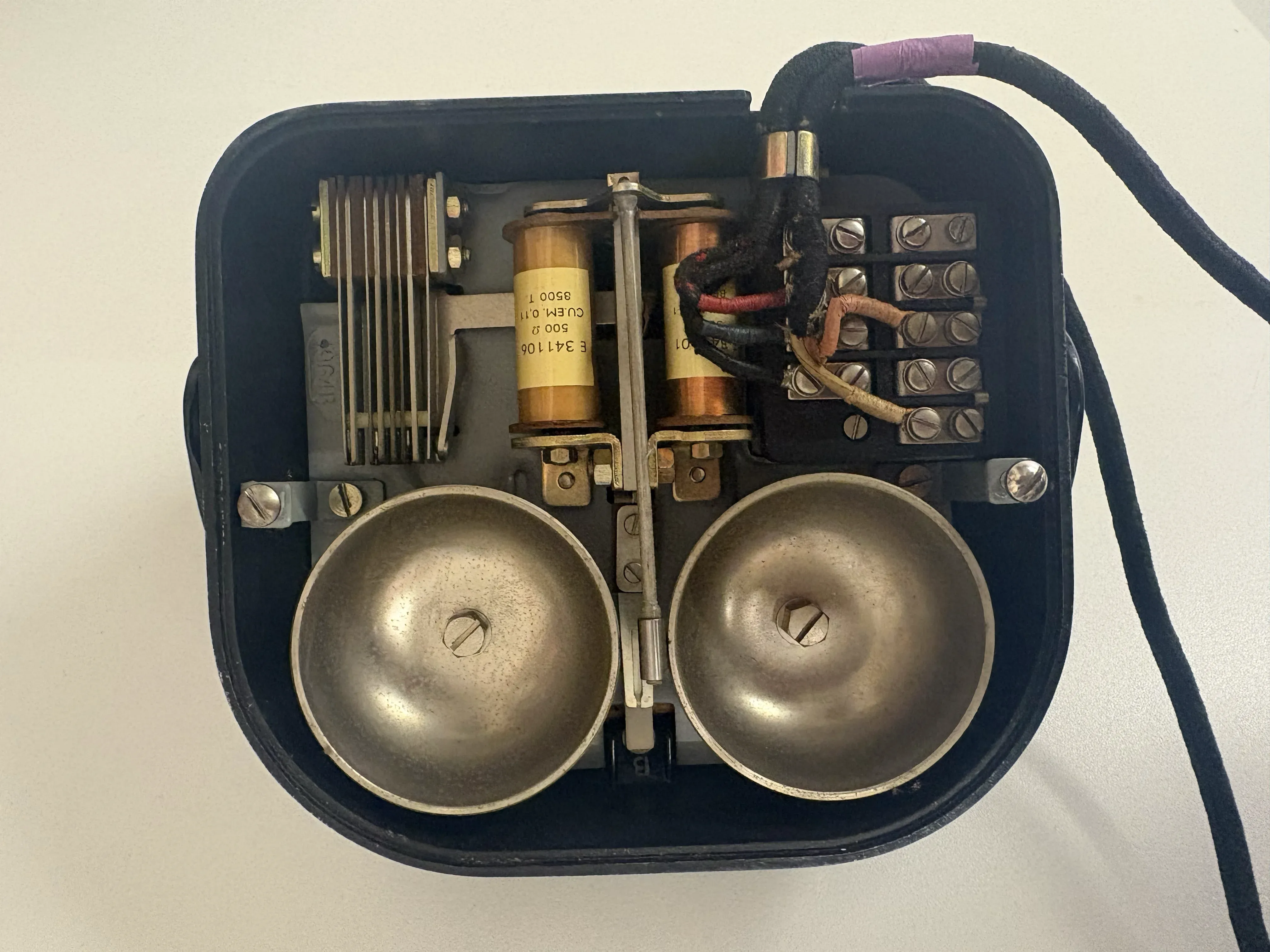
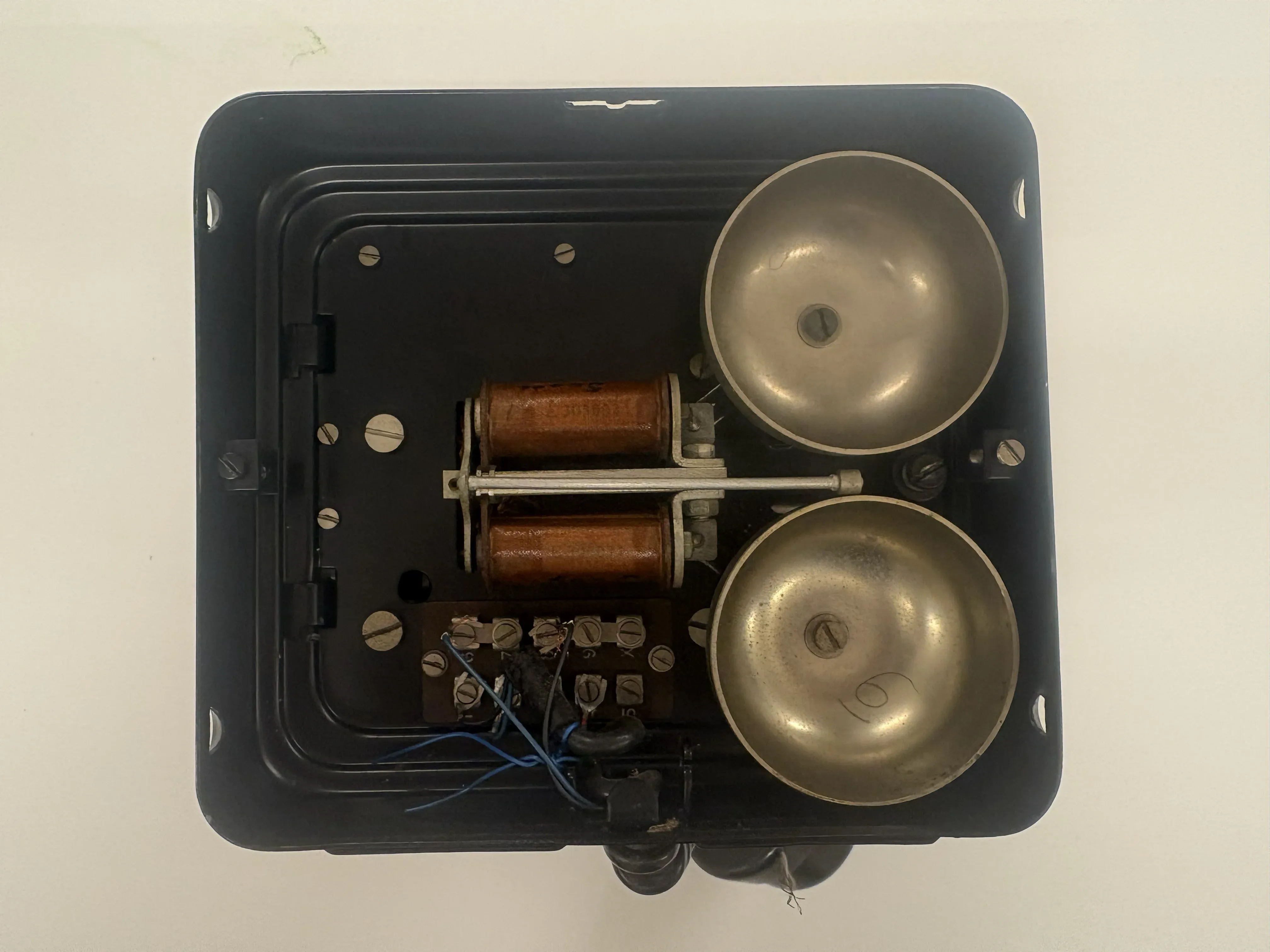
The ringing is also very mechanical. It’s not a digital sound. It’s a real hammer moving between two metal bells.
To make it ring, you need Alternating Current (AC). Because the current is constantly switching sides (positive to negative), the magnetic field changes back and forth. This makes the hammer fly left and right, hitting the bells and creating that classic ringing sound.
What kind of power do these phones use?
This part surprised me. Without power, the talking circuit doesn’t work because you need electricity to create that magnetic field for the speaker.
Back in the day, the talking circuit was powered with 48V DC, which is actually quite high! But the bells are even crazier: they received between 60V AC and 120V AC to get that hammer moving!
I will explain how the dial works in a later post!