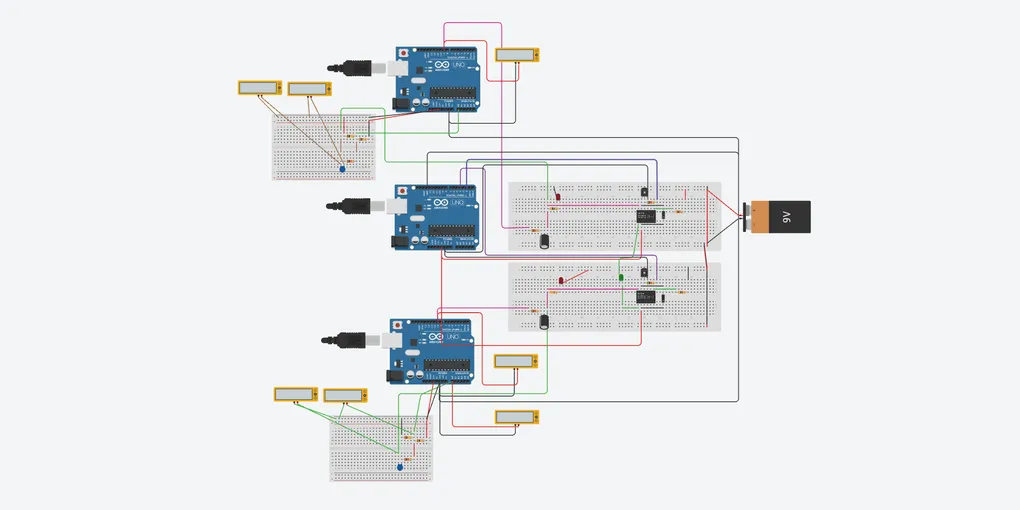
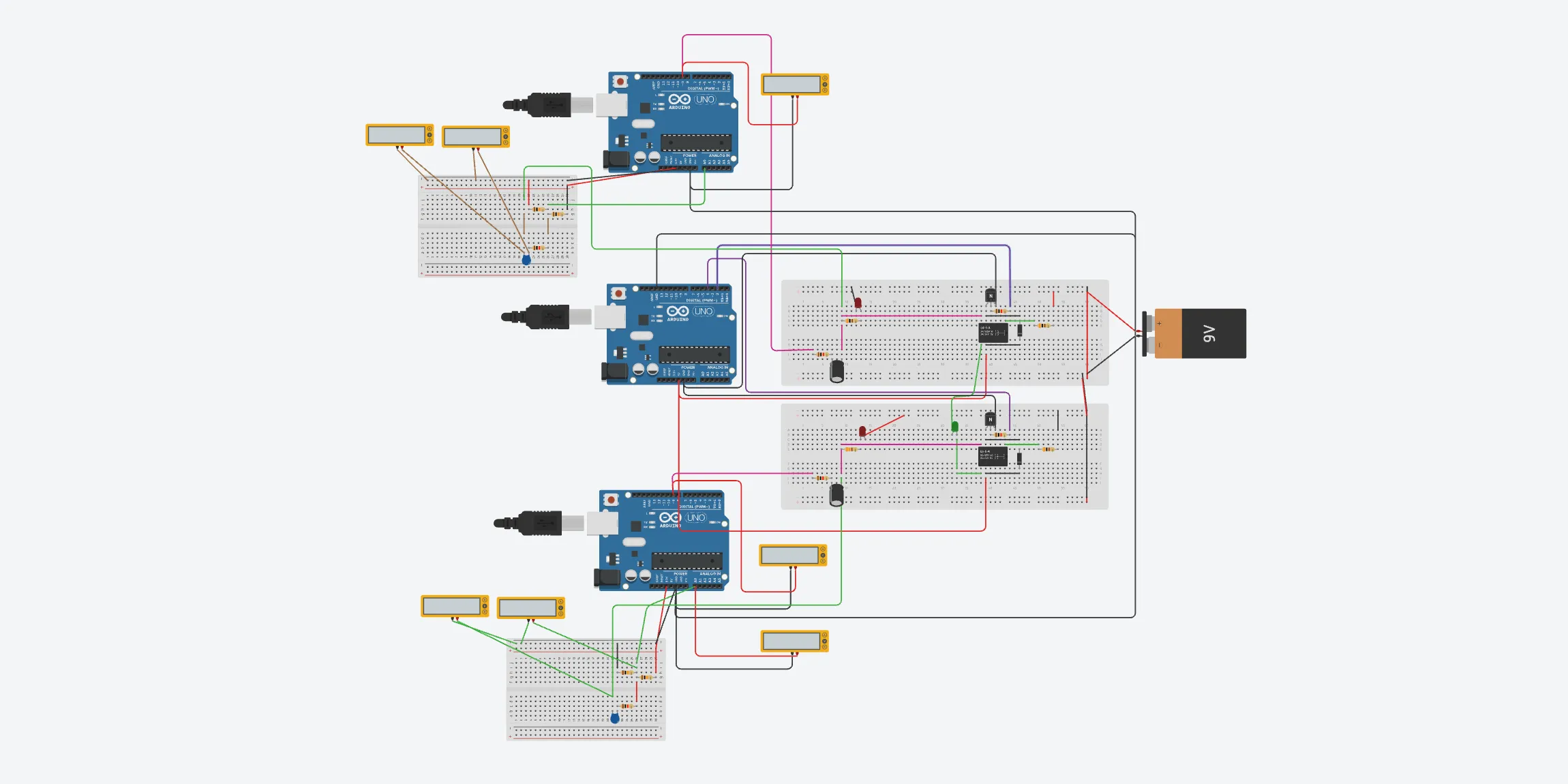
Before I dared to wire everything up for real, I built a new simulation. This version includes two extra Arduinos to act as bridges between the Raspberry Pi and the telephones.
These Arduinos have two main jobs:
Playing Sound: Converting the digital signals coming from the Raspberry Pi into analog signals the phone can “understand.”
Recording Sound: Converting the analog audio from the phones back into digital data for the Pi to store.
The Tricky Part: Voltage Safety
The recording side of this is where it gets a little complicated. My phone circuit is powered by 9V, but the Arduino pins can only handle a maximum of 3.3V. To keep from frying my new “bridge” Arduinos, I had to design a way to step down the voltage during the recording process.
By using a network of resistors, specifically voltage dividers, I can safely scale those 9V signals down to a level the Arduino can “listen” to without being damaged. To make it even safer, since voltage spikes can occur due to dialing the rotary or switching between on/off hook, I added some diodes for protection. I haven’t tested it yet, so I don’t know if the recording circuit will work in real life.