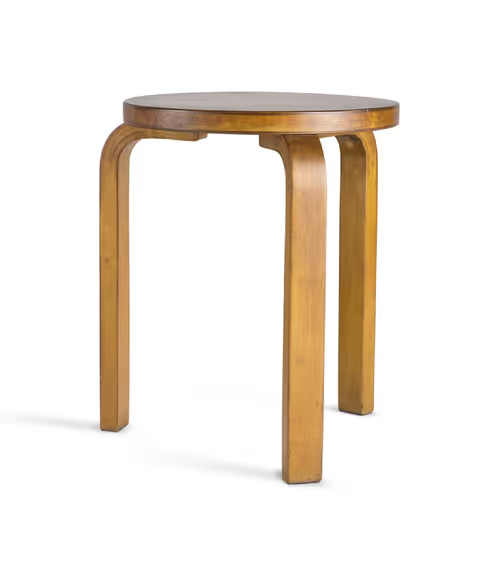
It is hard to imagine a more minimalist piece of seating furniture than Alvar Aalto’s stool 60, consisting of a seat mounted onto three wooden legs. Although there is also a four-legged version, three legs suffice in terms of stability and ability to stack the stools by the dozen. The distinctive detail is the right-angle bend at the top of each leg, enabling it to be screwed firmly to the seat. The bending technique, specially developed and patented, calls for parallel slits to be made in the upper end of each long solid birch segment; water and heat are then added to make the wood pliable. Then, thin pieces of wood dipped in glue are inserted into the slits. This alteration permits a 90-degree bend at the intended location without breaking. In keeping with Aalto’s notion of flexible standardization, the bent leg was used for other types of furniture, like tables, as well. The stool’s seat was available upholstered or in a selection of linoleum designs. The public first encountered the stool at a small exhibition of Aalto’s furniture in the Fortnum & Mason department store in London in 1933. Already in 1934, 2,000 stools were exported to England alone; approximately eight million have been produced to date. The design’s success is reflected not least by the fact that the Swedish furniture manufacturer Ikea offers a nearly identical model – the Frosta Stool – with legs made of bent laminated wood.