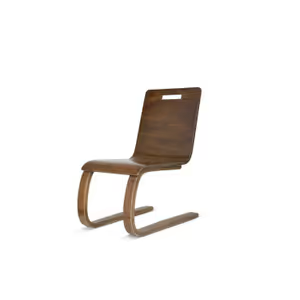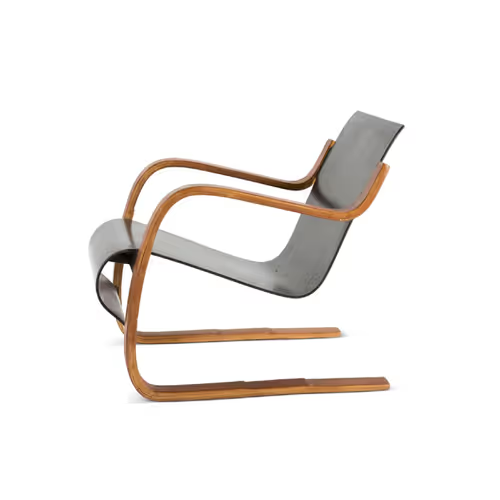
The versatile Hungarian artist, photographer, and filmmaker László Moholy-Nagy was a major influence on the furniture design work of Alvar Aalto. Especially Moholy-Nagys book Von Material zu Architektur (1929) likely encouraged his own experimentation with the cutting, laminating, and bending of wood. At the 1932 Nordic Housing Fair in Helsinki, this high-backed cantilever chair was displayed with other wood furniture, which Aalto designed for the Paimio tuberculosis sanatorium. The model was later called simply Highback Chair. What differentiates this chair from all other Aalto models is the three-dimensional – rather than two-dimensional – modelling of the backrest which is slightly concave so that it accommodates the seated person. One year after the Highback Chair was presented to the public, Aalto introduced the 401 Chair at the Triennale di Milano – yet another cantilever chair with a high seatback, but this time upholstered so that bent plywood was not required for its production. The fact that the Highback Chair is not represented in photographs of international exhibitions of Aalto’s furniture suggests that very few copies were produced, probably because it proved to be complicated to produce the three-dimensional seat shell. Aalto no longer aimed for three-dimensionally formed plywood as had been realized with the Highback Chair. However, Charles and Ray Eames developed this technique further, working together with Aalto’s compatriot, Eero Saarinen, who had emigrated to the United States. Aalto’s furniture designs were an important precedent for this design trio.