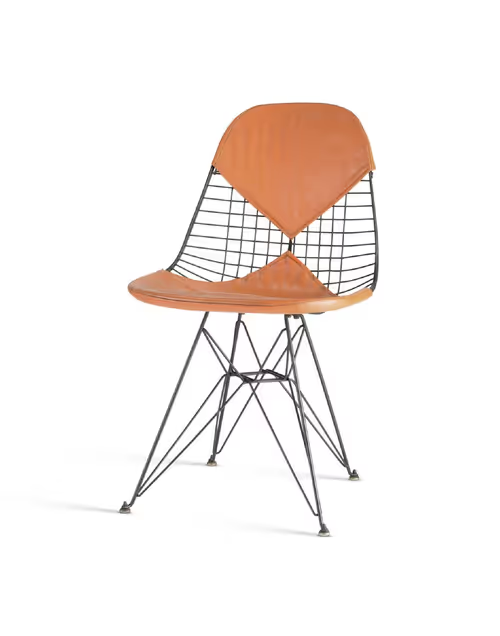
Charles and Ray Eames were fascinated by the structural performance of steel wire, which was rarely used in the furniture industry. Inspired by the work of inventor and architect Buckminster Fuller, their development of the Wire Chair was aimed at creating a robust yet lightweight chair from as little material as possible. The first experimental models took the form of wire structures composed – like Fullers structures – of triangles. This approach, however, was less suitable for a solid seating shell. Ultimately the rectangular grid structure still in use today was constructed from thirty-five wires for a maximum of stability. The ends of these wires have been fixated using resistive spot welding, a technique already commonplace on an industrial scale in the 1950s, for example in the production of shopping carts. The wire shell of the chair is impressive in its transparency and optical lightness. Despite its ergonomically shaped shell, the Wire Chair cannot be comfortably sat on for longer periods of time. The Eames therefore designed several different cushions. An ideal compromise between functional and aesthetic aspects was found with the so-called Bikini pad, which still allows the grid structure of the shell to show in some places. The Eames Office expanded the potential area of use for the wire shells by combining them with a range of different bases, which contributed to the success of the Wire Chair, making it one of their best-selling and longest-running products.