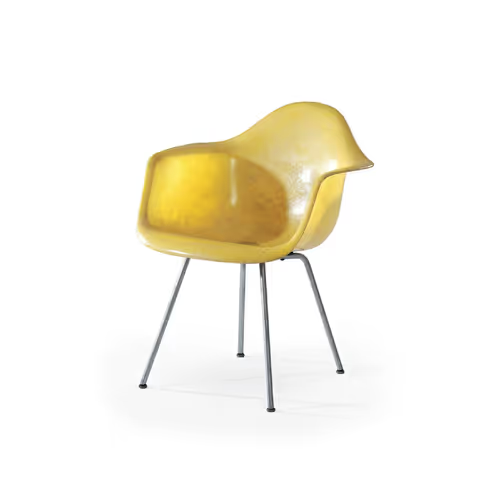
The concept of a one-piece ergonomic seat shell had already been formulated by Charles Eames and Eero Saarinen in 1940. After fruitless attempts, Ray and Charles Eames had to admit that such a shell could not be made from three-dimensionally bent plywood. When MoMA announced an international competition in 1947 for Low-Cost Furniture Design, they saw it as a welcome opportunity to research alternative solutions. The objective of the competition was to develop inexpensive industrially produced furniture to meet the increased furniture demand of the postwar years. Inspired by the automobile industry, the Eames’ decided to use metal sheets for their seat shells, a project ultimately abandoned, however, due to the considerable investment this would have entailed. Thus, in 1949, Charles Eames contacted the company Zenith Plastics, which specialized in the processing of fibreglass-reinforced polyester resin. In long meetings the two parties sounded out the possibilities of manufacturing low-cost shells in this specific polyester resin and adapted the competition entries to the demands of the new material. The first, still handcrafted, copies of the armchair were presented in the Low Cost Furniture exhibition at MoMA in spring 1950. Serial production began that same year. Less complex shells for the Plastic Side Chair followed in 1951. The plastic shells are by far Ray and Charles Eames’ most successful design in terms of numbers produced – and probably the most influential as well.